
- Home
- Services
- Vehicle Coverage
- Area Coverage
- Addlestone
- Albury
- Aldershot
- Ascot
- Ash
- Ashford
- Ashtead
- Ash Vale
- Badshot Lea
- Bagshot
- Barkham
- Binfield
- Bisley
- Blackwater
- Bracknell
- Bramley
- Brookwood
- Burnham
- Byfleet
- Camberley
- Charleshill
- Charvil
- Chertsey
- Chessington
- Chilworth
- Chobham
- Church Crookham
- Claygate
- Cobham
- Cookham
- Crondall
- Crowthorne
- Datchet
- Deepcut
- Dorking
- Earley
- Eashing
- East Clandon
- East Horsley
- Effingham
- Egham
- Elstead
- Epsom
- Esher
- Eton
- Eversley
- Ewshot
- Fairlands
- Farley Hill
- Farnborough
- Farnham
- Feltham
- Fetcham
- Finchampstead
- Fleet
- Frensham
- Frimley
- Godalming
- Great Bookham
- Guildford
- Hampton
- Hare Hatch
- Harmondsworth
- Hartley Wintney
- Hascombe
- Hayes
- Heckfield
- Hedgerley
- Hersham
- Holmbury St Mary
- Holyport
- Hook
- Hounslow
- Iver
- Jacobs Well
- Kingston-upon-Thames
- Knaphill
- Knowl Hill
- Leatherhead
- Long Ditton
- Maidenhead
- Mattingley
- Mayford
- Mickleham
- Milford
- Molesey
- Mytchett
- Ockham
- Odiham
- Old Windsor
- Owlsmoor
- Oxshott
- Palmers Cross
- Peaslake
- Peper Harow
- Pirbright
- Pyrford
- Reading
- Richmond
- Rotherwick
- Rowledge
- Runfold
- Sandhurst
- Shackleford
- Shamley Green
- Shalford
- Shepperton
- Shere
- Shinfield
- Slough
- Sonning
- Spencers Wood
- Staines-upon-Thames
- Stanwell
- Stoke D’Abernon
- Stoke Poges
- Sunbury
- Sunningdale
- Surbiton
- Sutton Abinger
- Swallowfield
- Taplow
- Teddington
- Thursley
- Tilford
- Tongham
- Twickenham
- Twyford
- Virginia Water
- Walton-on-Thames
- Wanborough
- Warfield
- Wargrave
- West Byfleet
- West Clandon
- Westcott
- West Drayton
- Weybridge
- White Waltham
- Windlesham
- Windsor
- Winkfield
- Winnersh
- Wisley
- Witley
- Woking
- Wokingham
- Woodley
- Worplesdon
- Wraysbury
- Wrecclesham
- Yateley
- Blog
- FAQs
- Contact

VW Replacement Key Programming

If you are in need of Volkswagen replacement key programming, look no further – BOTR Auto Locksmith Ltd can certainly help. If you’re interested in seeing how it is done, keep reading.
VW replacement key programming is rather complex when compared with most other vehicles. It does depend on the year and model of your Volkswagen, and also whether you’ve lost all car keys or just want a spare, but VAG Group have made it so that key-related data is extremely difficult to acquire. Depicted below is a job on a Volkswagen Passat ‘all keys lost’.
Most Volkswagen key programming jobs require removal of a module or two. For this VW Passat job, I had to remove what is called the ‘comfort module’. This contains the ‘CS Code’ and ‘PIN Code’ whom are both required to initiate key programming.
This first step is to get the comfort module on bench and remove it from its casing to identify the 95320 chip. The chip in question is the little 8-legged chip with ‘95320W’ written on.

Once the chip is identified, you have to de-solder it. First apply a generous amount of flux to the legs.

After I did this, I heated up my hot air gun to 360 degrees and left it to mature at that temperature for about 60 seconds. I then hovered it above the chip until the solder turned shiny (this means it has melted).

Once the solder is shiny, I gently picked it off the board with some tweezers. The board now looks like this.

Now that the chip is off, I can read the information I need from it. To do this, I had to clean it off and seat it into an adapter that then plugged into the top of my programmer.

After reading the data, there are two approaches you can take to programming the key. The first is to acquire the CS code and PIN code, and the second is to edit the dump file you read from the chip and write the new file in. Below I will demonstrate how I did both.
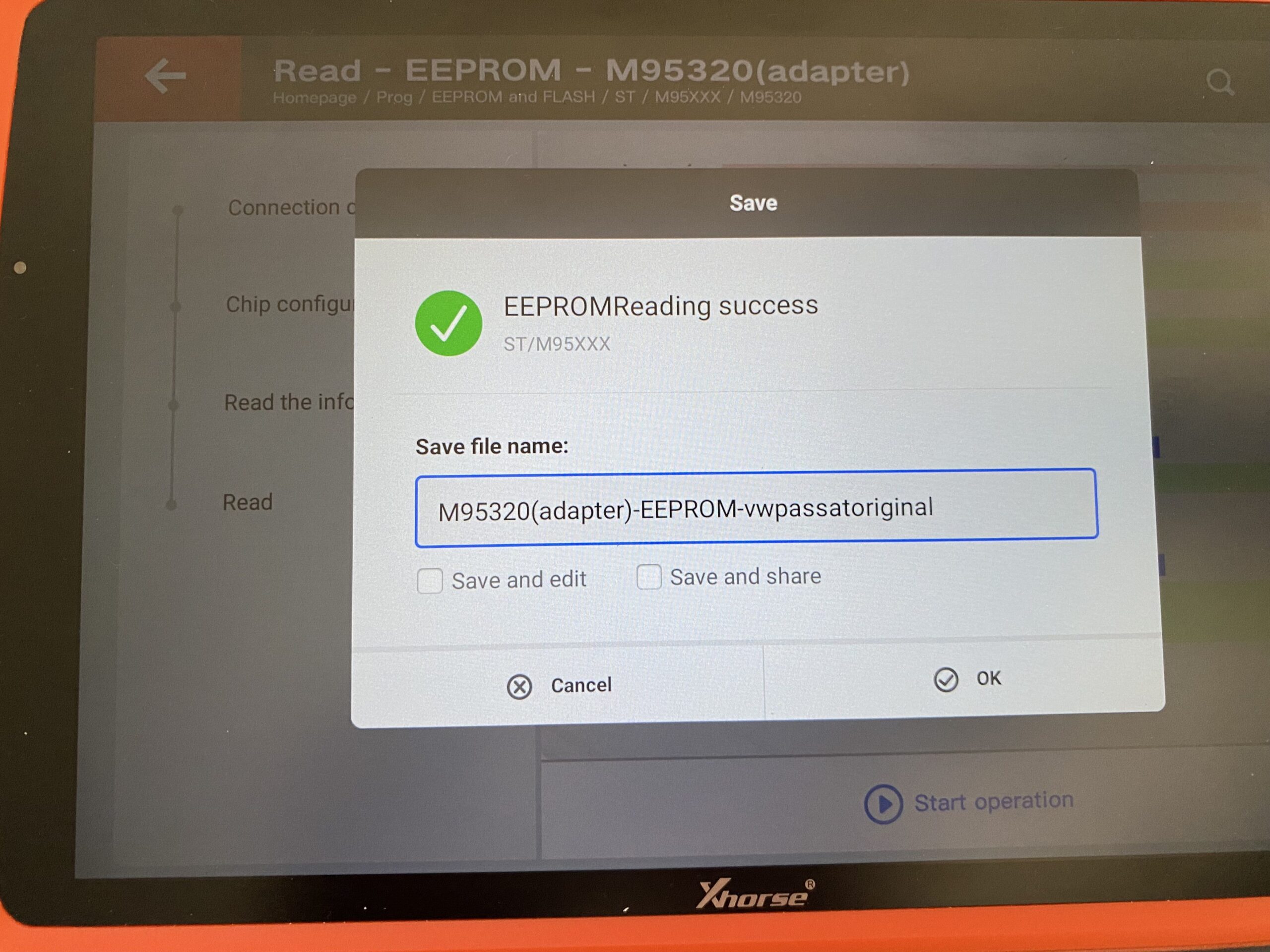
I first saved the original data file.
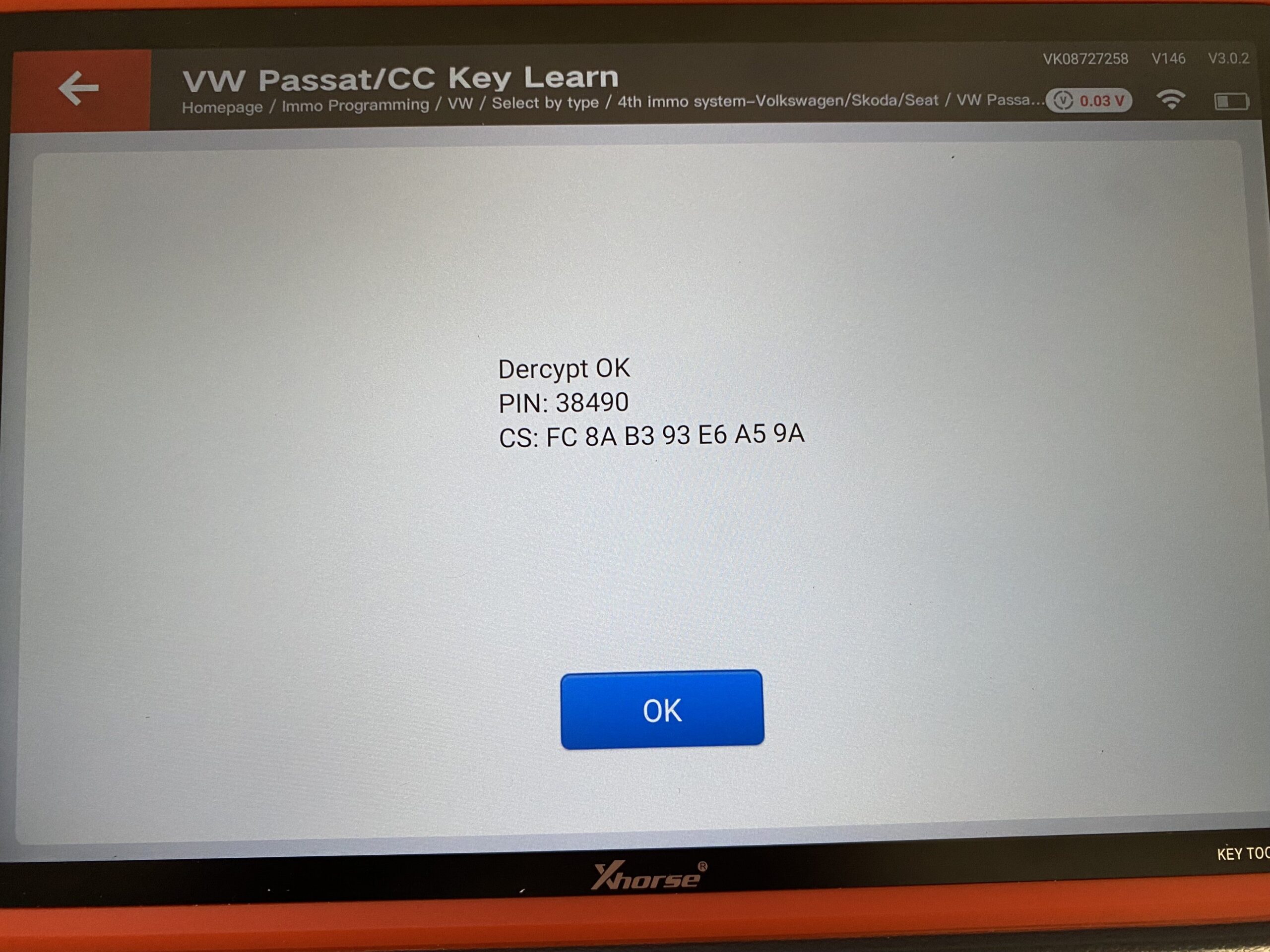
I then decrypted it to get the CS and PIN code.
I then inputted these details to make a working key.
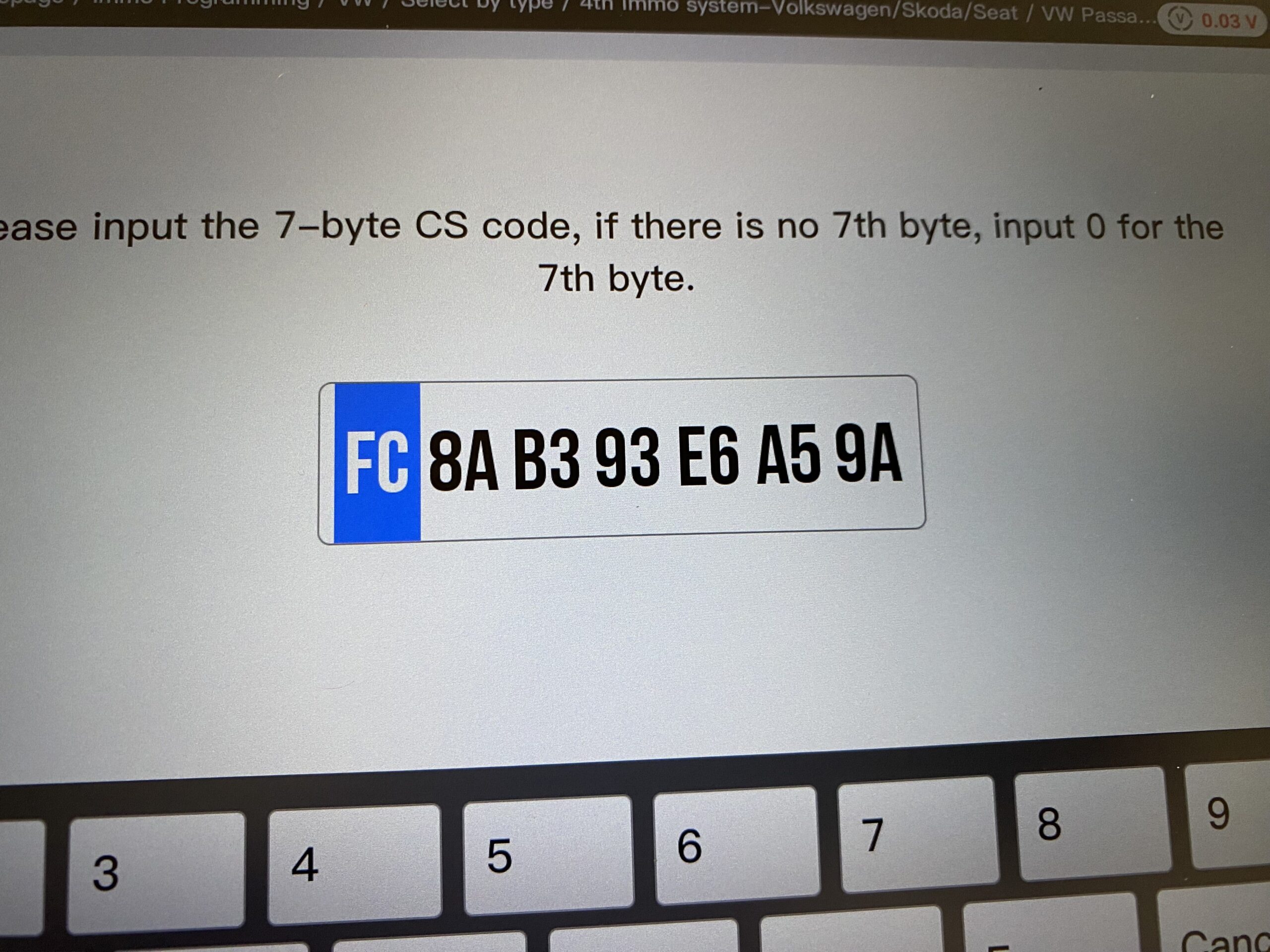
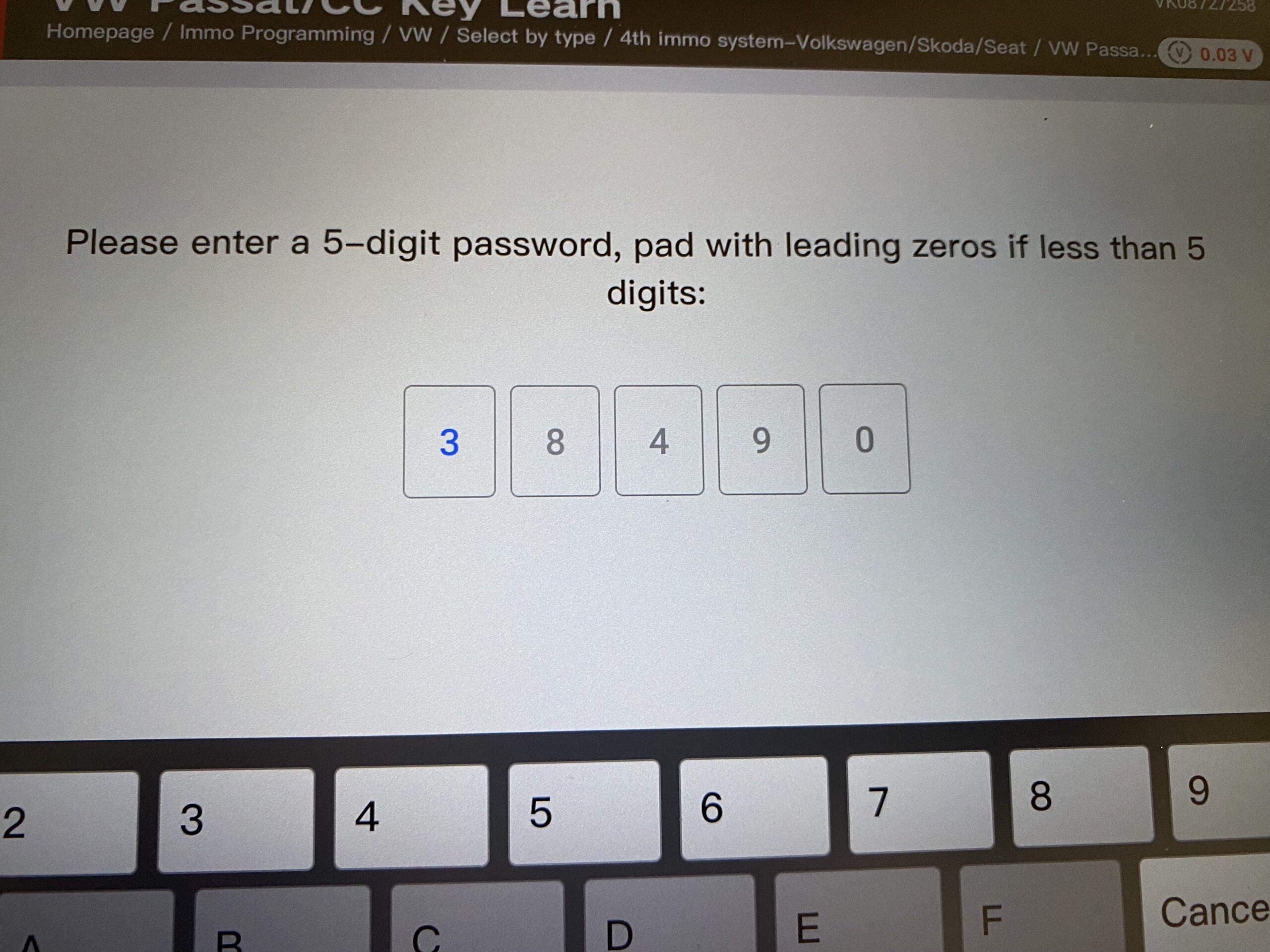
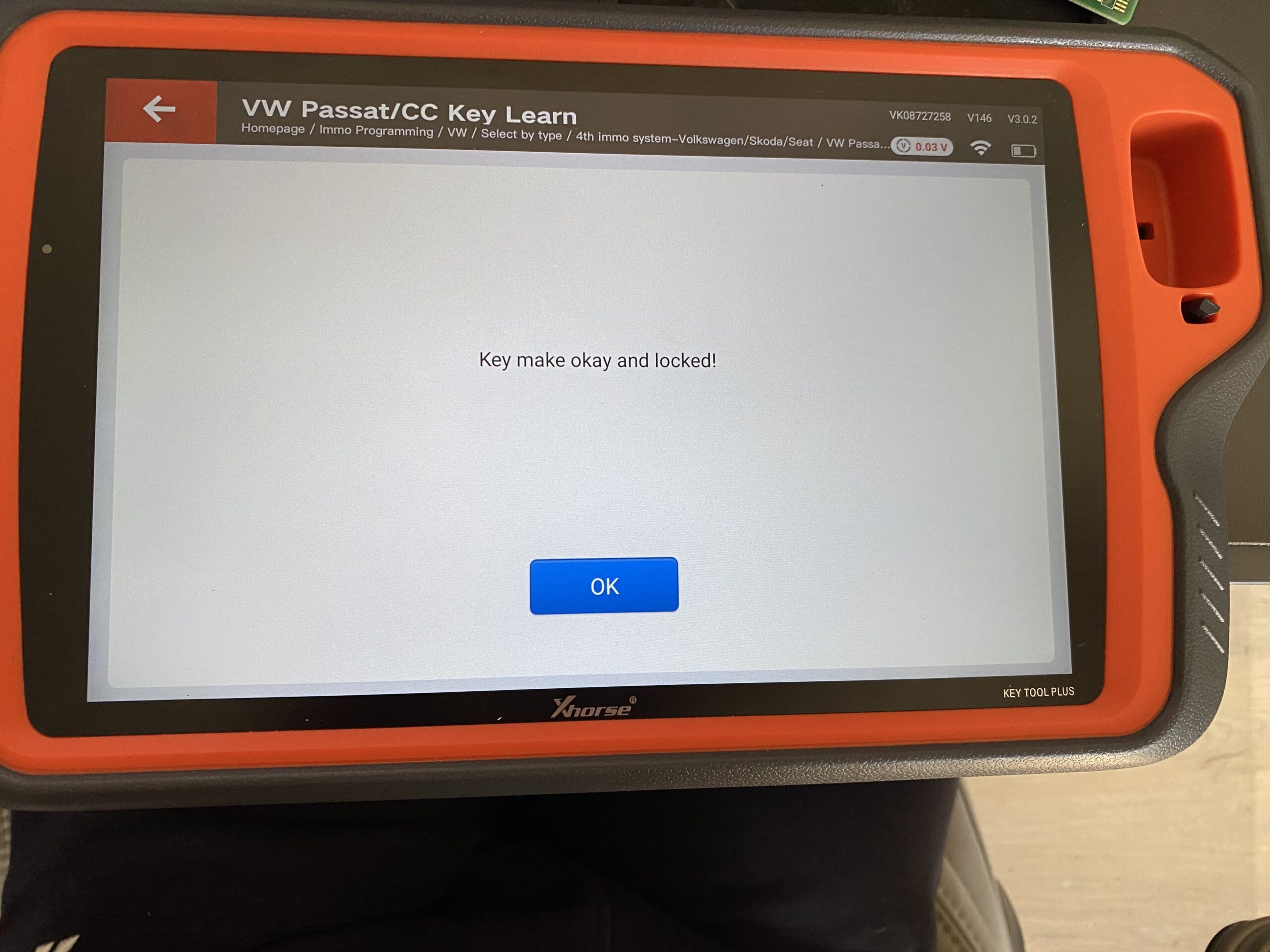
The second way is done differently. It is done by editing the data and writing it back into the 95320 EEPROM chip.
My first step was loading the original file. Note the code of Key 1.
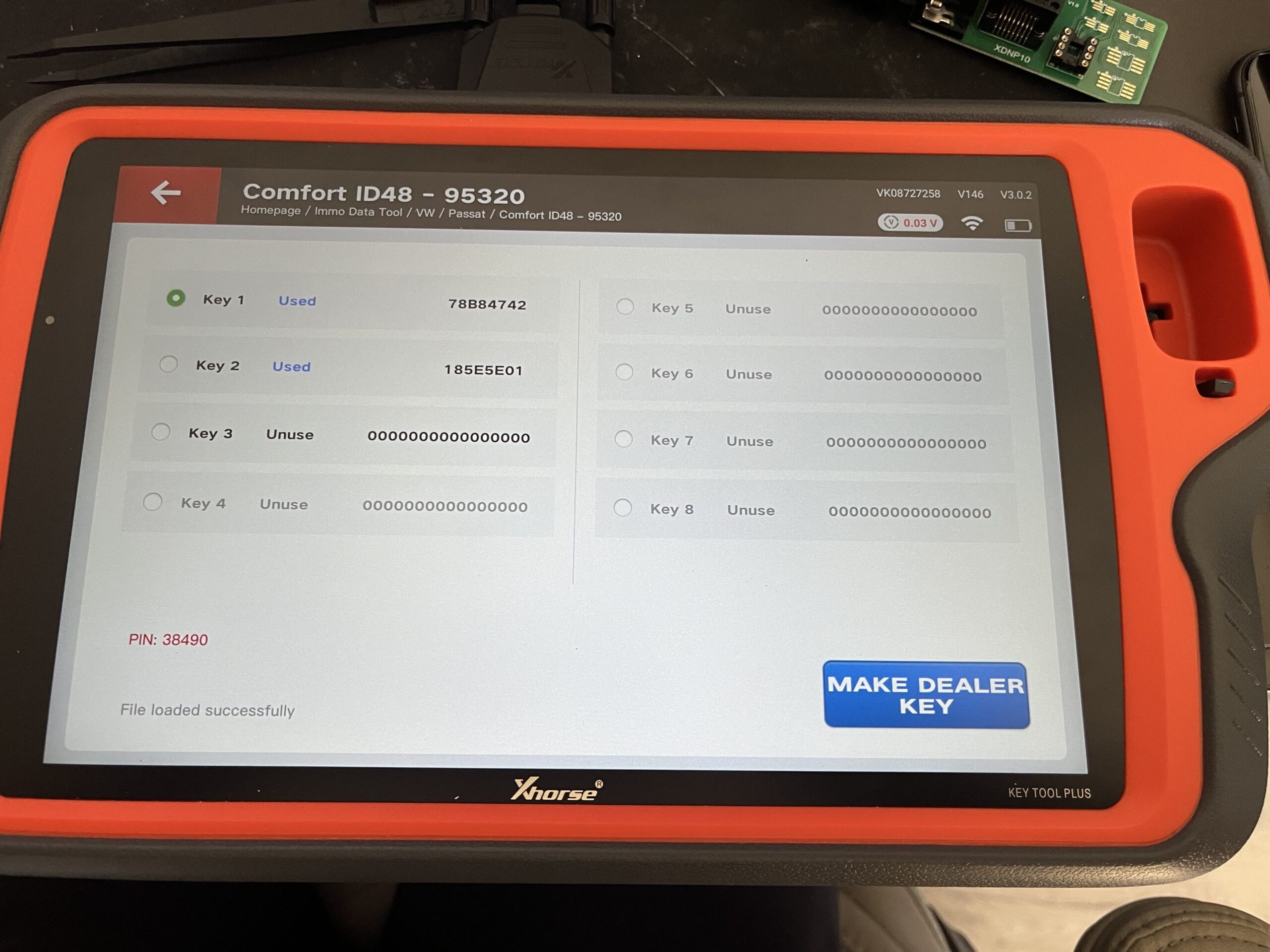
My second step was overwriting key 1 with a new, replacement key. When successful, a success message appears.

Now I wrote the new data file back into the chip that was still in the adapter.
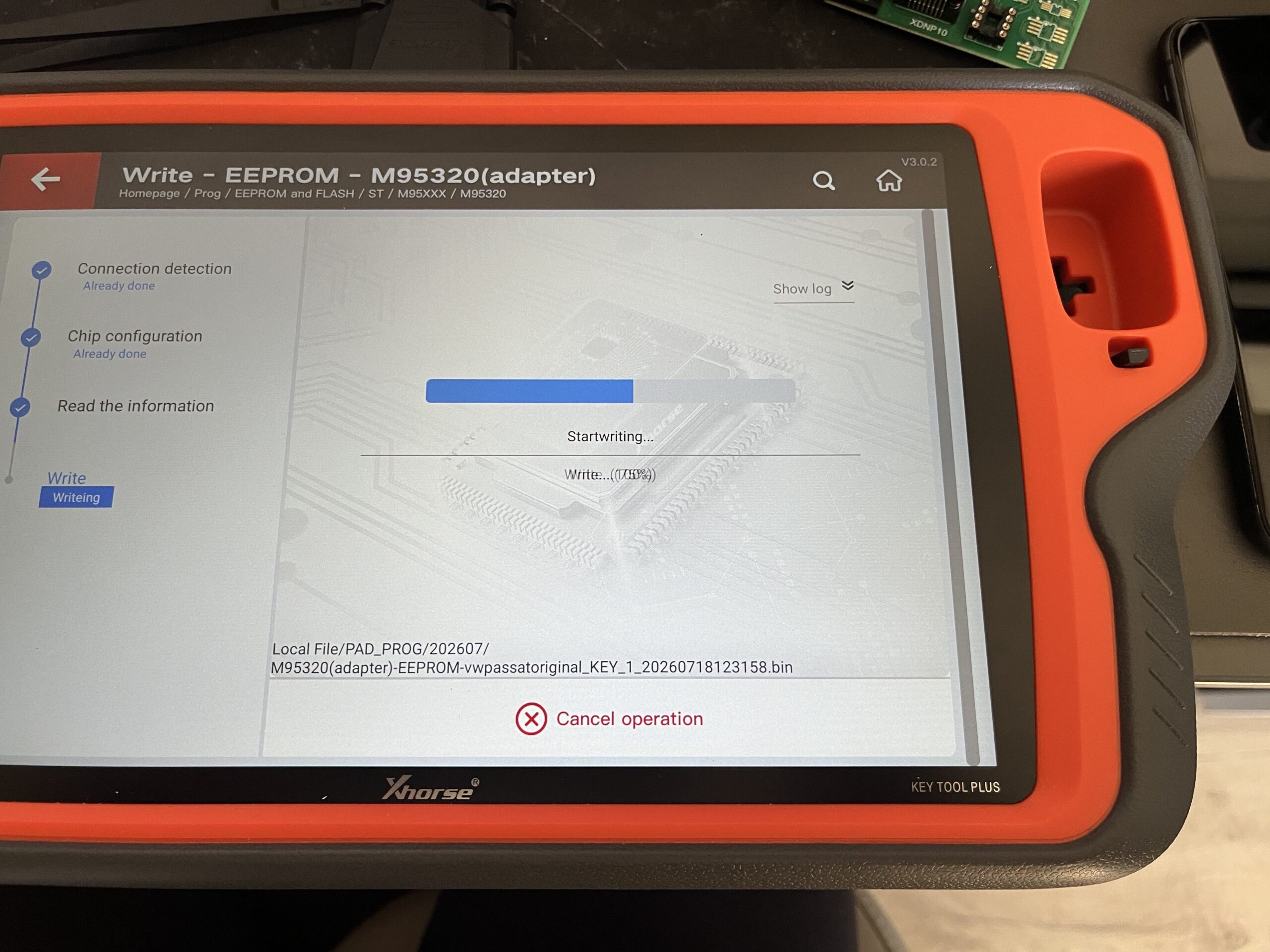
Once it has finished writing, you get this message.

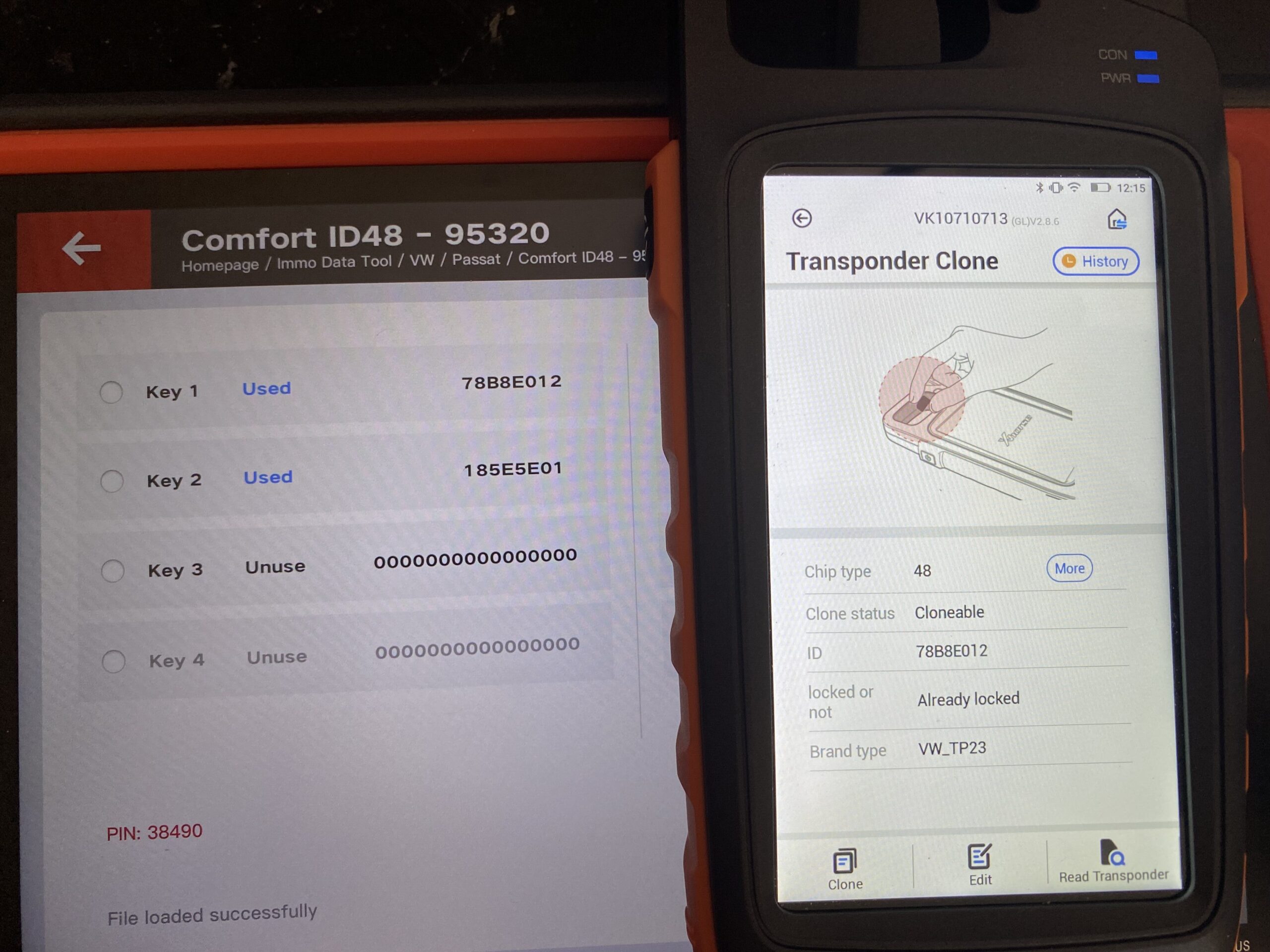
It is good practice the check your work before re-soldering the chip back onto the PCB board.
I read the new data file that I wrote into the EEPROM chip. As you can see below, if you compare the ID of key slot 1 vs the ID of the key I’ve just programmed, they are the same (78B8E012). You should always do this extra step before re-soldering to save any future headaches.
Before re-soldering, I applied a generous amount of flux to the pads. As long as you have de-soldered properly, there shouldn’t be any need for applying any more solder, and you can just use a hot air gun to melt the chip into the existing solder.


When finished, the board use plenty of cleaner to remove any flux residue, and the board should look and feel exactly as it did when you removed it from its casing.

I now have a key that will start this VW Passat. All that I had to do after this is refit the module back into the car.
I hope you enjoyed some insight into this job! For reference, this would be considered a more advanced job, but there are some vehicles that are a lot more advanced than this! If you’re interested in learning about similar jobs, click here.
If you’re looking for an auto locksmith near you that covers Volkswagen keys, BOTR Auto Locksmith Ltd operates in Surrey and parts of Berkshire and Hampshire. Feel free to get in touch now!